
Your client onboarding process is the first line of defence against any potential risks to you and your practice.
Whilst you are probably keen to start working with your clients right away, this is the stage where you verify clients’ identities, assess financial reliability, carry out Anti-Money Laundering checks and ensure regulatory compliance.
Conducting thorough due diligence checks and having the right systems in place is crucial for spotting potential red flags early and managing them effectively.
Ultimately, when handled smoothly (with the help of technology), it can create a great first impression while protecting your practice from unnecessary risk.
What are the risks in client onboarding?
Client onboarding at first glance seems pretty risk-free. It is probably something you have done many times over the year.
However, if this process is rushed, incomplete or reliant on manual systems, it can expose your firm to several risks. The greatest risks posed by poor client onboarding within accountancy firms include:
- Anti-Money Laundering (AML) and Know Your Customer (KYC) failures – Firms operating in financial, legal or professional sectors must carry out identity verification and due diligence checks. Failure to do so can lead to regulatory penalties and fines.
- Financial risk – Onboarding clients without proper credit or background checks can put your firm at risk of non-payment or potentially being involved in fraudulent activity.
- Fraud and identity risks – Poor verification processes can increase the risk of fraudulent identities entering your system, potentially damaging your firm’s reputation.
- Operational inefficiencies – Manual onboarding processes can often result in delays, missing documentation errors and inconsistent client data.
- Human risk errors – Relying on manual checks increases the likelihood of mistakes and compliance gaps.
- Poor client experience – Slow or disorganised onboarding can lead to frustrated clients and damage relationships before they even begin.
Relying on older, manual systems just adds the potential for something to go wrong. If you still manage this process over multiple platforms or spreadsheets, you are simply exposing your firm to risks that it doesn’t need to take.
How can automation help manage onboarding risks?
Technology is becoming essential in managing the risks associated with client onboarding and yet many firms still rely on outdated practices or disjointed systems – that can do more harm than good.
Automated onboarding systems can streamline due diligence checks and ensure compliance processes are carried out consistently and accurately.
They also provide real-time risk reporting and generate risk scores before a client relationship is established.
A client’s risk profile can change over time and continuous due diligence is crucial.
Automated systems can monitor client data regularly and alert you to any new risks as they arise.
Having a single, centralised system also creates a single source of truth for client information, making it easier to track records, manage compliance and maintain accurate data.
If what you do now sometimes feels chaotic or just a bit unorganised, then moving to a single digital platform that “does it all” is a great first step to derisking your onboarding processes.
How can our client onboarding system help you?
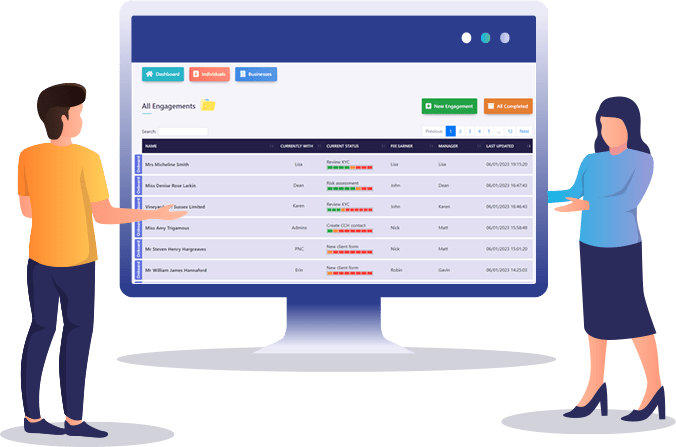
Our client onboarding system integrates due diligence, ongoing compliance monitoring, AML and KYC checks and risk assessments into one streamlined workflow.
Through our integrations, we can also automate key checks such as identity verification and credit assessments.
Our aim is to save you time and resources on manual checks and automate your monitoring and review processes, giving a better user experience for staff and clients and creating significant efficiency savings.
With the right onboarding technology in place, you can focus on building your client relationships and be sure that any risks have been managed from the very beginning.